Veterans, PTSD, TBI & 5-MeO-DMT: An Interview with Combat Veteran Geoffrey Costa
For many veterans navigating PTSD, traumatic brain injury (TBI), moral injury, and the long tail of hypervigilance, “high-functioning” can mask a relentless churn underneath—sleep disruption, anxiety, irritability, and a nervous system that never fully stands down. Conventional approaches can help, yet countless veterans still search for a way to regulate, reconnect, and reclaim a sense of self and purpose beyond the uniform.
In trauma-informed, medically supervised settings, some find that a carefully held 5-MeØ (5-MeO-DMT) retreat—paired with comprehensive screening, on-site clinical support, and multi-week integration—can catalyze a different kind of shift: from isolation to connection, from white-knuckling to regulation, from story-bound pain to a grounded experience of presence. This work is not a quick fix or a universal solution, and it is not medical advice; it is a relational, protocol-driven container where insight is translated into daily practices, community support, and family-system repair over time.
In the veteran community, transformation doesn’t happen in a vacuum—it happens in relationship: with trusted facilitators, with peers who understand the cost of service, with partners and children at home, and with the land that holds the work. That relational field—plus structured integration—often determines whether a glimpse becomes lasting change.
About Geoffrey Costa
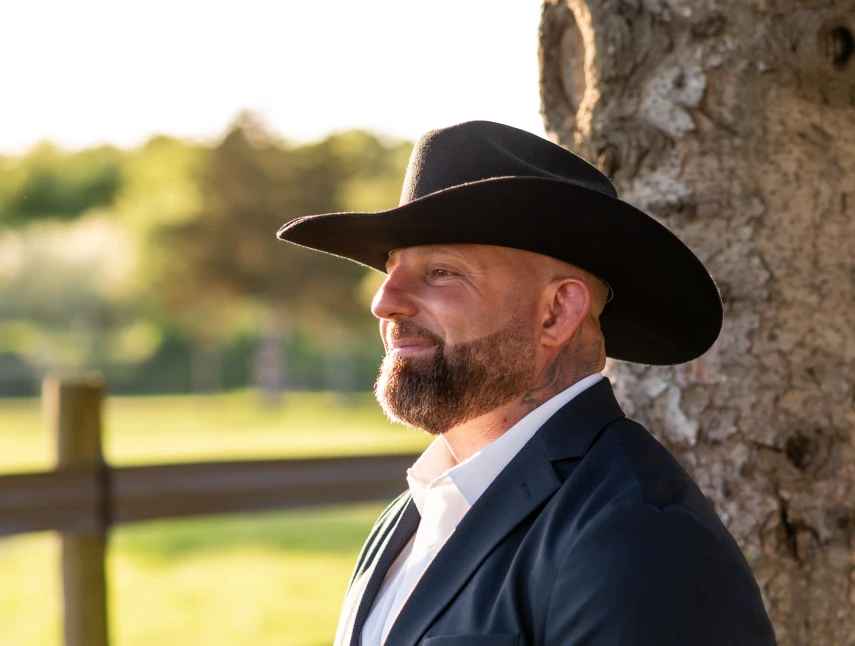
Geoffrey Costa is a West Point graduate, former Army officer, and combat veteran whose path has taken him from the battlefield to the boardroom—and, ultimately, to a profound spiritual awakening. After years of masking deep trauma behind high achievement, he chose to dismantle the armor and rebuild from within. Today, Geoffrey is a leadership coach, business consultant, lacrosse coach, equine-therapy advocate, and speaker devoted to helping others heal and lead with purpose. He lives on Long Island, NY, with his wife, Kathryn, and their blended family—building a legacy rooted in love, truth, and intentional living. He has completed four retreats at Tandava.
Note: The following Q&A is educational and reflects one person’s experience. It is not medical advice or a claim of treatment or cure. Everyone’s path is unique.
Q&A with Geoffrey Costa
1) Before we get to ceremony—who were you before you arrived?
- What did “high-functioning” look like on the outside, and what was happening inside?
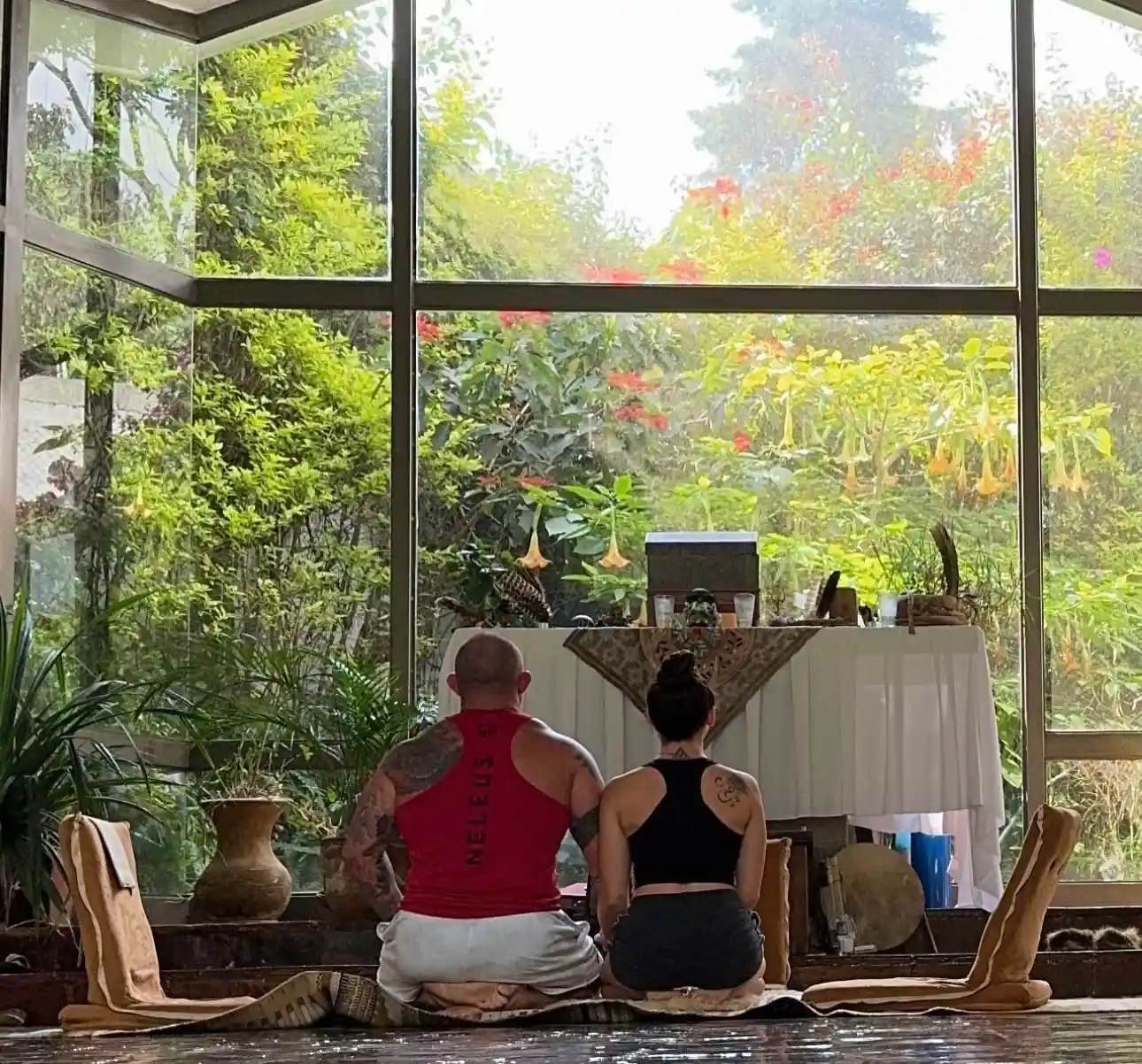
Before I ever stepped foot at Tandava, I was a man who looked “successful” to everyone but myself. I was the West Point grad, the Army officer, the combat veteran, the corporate leader… the guy who could achieve anything, fix anything, carry anything.
But high-functioning was really just highly armored.
From childhood, I learned to hide everything. My father took his own life when I was three. That trauma shaped the air I breathed before I even had words for it. Add in the instability that followed, the abuse, the fear, the pressure to act like everything was fine—to smile for the neighborhood while the inside of the house felt like chaos. By the time I reached adulthood, I was an expert at keeping the mask on.
In combat, that armor became literal. I lost soldiers. I took blasts. I carried a TBI and PTSD like invisible rucksacks I never put down. When I came home, I didn’t know how to live in a world that wasn’t trying to kill me. My nervous system never stood down.
So on the outside, I was “thriving.”
On the inside, I was drowning.
Sleep was a joke. Anger was constant. Hypervigilance was the background state 24/7. I feared silence more than gunfire because silence made room for every memory I’d spent decades outrunning.
High-functioning was survival—
not living.
- When did you realize grit alone wasn’t working?
When my marriage fell apart…
when my kids saw a version of me I never wanted them to see…
when I found myself in a basement apartment trying to hold together a life I had built from pure grit and pressure…
and especially after my lowest point—my suicide attempt.
That was the moment I could no longer pretend.
Grit got me through war.
But grit was killing me in peace.
I knew I needed something different. Something deeper.
2) What drew you to this work—and why 5-MeØ?
- Was there a moment (or series) that shifted curiosity into commitment?
For years, therapy helped but couldn’t reach the parts of me that lived below language. I had trauma decades older than my adult vocabulary.
I heard about 5-MeO-DMT through veterans I trusted—men who were just as armored, just as proud, just as broken. They came back softer, more grounded, more regulated. Not “fixed”—but finally starting.
The moment curiosity became commitment was when I realized I wasn’t searching for a way to escape my pain—I was searching for a way to finally face it.
Warriors don’t run.
But I had been running from myself my entire life.
5-MeO wasn’t a “trip” or a way out—
it felt like the first doorway in.
- How did you evaluate settings and decide on a medically supervised, integration-led container?
Because I wasn’t looking for fireworks.
I was looking for healing.
A medicine this powerful requires:
• trauma-informed care
• medical screening
• clinical oversight
• consent-led facilitation
• slow titration
• real aftercare
• community support
• structured integration
Most places don’t offer that. Tandava did.
But more importantly, Joel and Victoria felt like people who saw the human before the veteran. People who understood that veterans need safety, not spectacle.
I trusted them with the parts of me I had never trusted anyone with.
3) Readiness and fear: what made “yes” feel safe enough?
- What were your non-negotiables (screening, medical oversight, consent practices, pacing)?
Fear was absolutely there. But readiness showed up as honesty.
I told myself: “If you keep living the way you’re living, you’re not going to make it.”
My non-negotiables were clear:
- Full medical screening
- Licensed medical staff on-site
- Trauma-informed facilitators
- Consent every step of the way
- Never being pushed into a dose
- Integration that lasted longer than the retreat
- A pace that respected the nervous system, not ego
When those needs were met, “yes” didn’t feel reckless. It felt responsible.
4) “Safe enough to let go”—what did that feel like in your body?
- Name the somatic signals (breath, jaw, chest, tremors, tears, stillness) that told you you were held.
I’ll never forget it.
For the first time in decades, I felt my jaw unclench.
My breath dropped deeper into my belly.
My chest softened.
Tears came—not because I was breaking, but because I realized how long I had been holding my breath as a man, a soldier, a father, a son.
There was a moment of stillness inside me that I had never felt before.
A sense of, “You can stop fighting now.”
Not surrender as defeat— surrender as return.
5) Expectations vs. reality
- What did you think would happen—and what actually did?
I’ll never forget it.
For the first time in decades, I felt my jaw unclench.
My breath dropped deeper into my belly.
My chest softened.
Tears came—not because I was breaking, but because I realized how long I had been holding my breath as a man, a soldier, a father, a son.
There was a moment of stillness inside me that I had never felt before.
A sense of, “You can stop fighting now.”
Not surrender as defeat—
surrender as return.
- Any myths about 5-MeØ you’d like to retire?
6) A moment that surprised you—during or after
Not the most dramatic; the most true. What shifted that you didn’t see coming?
During my first retreat, the deepest surprise was that I didn’t feel alone.
For someone who lived his entire life feeling alone—even in crowded rooms, even in combat formations—that was the miracle.
Afterward, the surprise was this:
peace actually felt possible.
Not guaranteed.
Not constant.
But possible.
I had never felt that in my life.
7) Why a second, third, and fourth retreat?
- What changed between retreats?
The first retreat cracked the armor.
The second one let me breathe.
The third one helped me rebuild.
The fourth one is where I stand now—integrated, grounded, ready for whatever life asks of me next.
- How did intention evolve as your nervous system found a new baseline?
Retreat 1: “Help me survive myself.”
Retreat 2: “Help me understand myself.”
Retreat 3: “Help me live differently.”
Retreat 4: “Help me love fully and lead with integrity.”
As my nervous system regulated, my intention shifted from damage control…
to authenticity…
to alignment…
to love.
8) Integration in practice: the first four weeks
- Walk us through your actual routine: sleep, nourishment, breath, movement, media boundaries, relationship touchpoints.
Integration is where the real work begins:
- Daily breathwork (especially in the mornings)
- Cold exposure / ice face plunge
- No alcohol
- Early sleep
- Whole food nourishment
- Nature walks in silence
- Media boundaries
- Daily gratitude practice
- Meditation before the world wakes
- Journaling
- Connection with safe people
- Reading instead of scrolling
- Presence with my children
I leaned heavily on 1:1 integration sessions and F.I.V.E. circles. Those circles have saved more veterans than they’ll ever know.
9) A conversation that changed after retreat
- With a spouse, child, teammate, or client—what did new honesty or regulation make possible?
The conversations with my children changed the most.
I stopped teaching them how to be strong through suppression.
I started teaching them how to be strong through presence.
I apologized for moments I wasn’t proud of.
I told them the truth—not the combat truth, but the emotional truth.
I became a father they could feel, not just respect.
10) Leadership after ego softens
- How did your definition of strength, command, and responsibility evolve?
- What shifted in how you lead teams (and yourself)?
I used to think leadership was pressure—
being the toughest, the sharpest, the most controlled.
Now I know leadership is presence—
being the most honest, the most grounded, the most aligned.
When ego softened, responsibility became cleaner.
I lead my athletes, my clients, my teams—not from command—but from connection.
And when I lead myself well, everything else follows.
11) From combat readiness to nervous-system regulation
- What did vigilance look like before?
- What does regulation look like now in stressful situations?
Before:
My vigilance was a curse. Everything was a threat. I couldn’t enjoy a restaurant, a movie, a morning at home.
Now:
I know when my nervous system is rising.
And I know how to bring it back down—
with breath, with grounding, with awareness.
- I no longer live braced for impact. I live open to reality.
12) Family system healing
- How did you communicate your process at home?
- What boundaries or rituals helped everyone feel safe?
I communicated my process with honesty and no dramatics. I told my loved ones, “I’m working on healing so I can love you better.”
Boundaries looked like:
- morning routine protected
- less alcohol
- presence before productivity
- choosing connection over distraction
Healing didn’t just change me— it softened the entire system.
13) When healing gets messy
- A dip or destabilizing moment you encountered—and how you navigated it with support.
There were dips.
Moments of emotional flooding.
Moments where old patterns knocked on my door.
The difference was:
I no longer feared them.
I reached out to facilitators.
I used breath.
I leaned on community.
I didn’t isolate.
Healing isn’t linear.
But it is possible.
14) Advice to a veteran who is curious but cautious
- If they’re reading this with crossed arms and an open heart, what would you say?
Brother, sister—listen.
You are not broken.
You are not beyond repair.
You are not weak for wanting peace.
You are human.
Curiosity is not weakness—it’s the first sign of life returning.
If you’re scared, good.
Fear means you still care about living.
Find a safe container.
Find trauma-informed facilitators.
Find people who honor your consent and your humanity.
And when you’re ready, step through the door—
not to escape your past,
but to finally stop carrying it alone.
15) What “coming home” means now
- If you could offer one sentence to the version of you who was still armoring—what would you say?
Coming home means this:
“You can stop fighting. You are loved. You matter. And you are allowed to live.”
It means peace is possible.
It means presence is possible.
It means love is not something you earn—it’s something you allow.
16) Practices that maintain steadiness. Two or three simple, dependable practices you return to when old patterns whisper.
- Gratitude every morning
- Cold exposure
- Breathwork
- Silence in nature
- Daily integrity
- Presence with my wife and children
- Staying impeccable with my word - words are who we want to be. Actions are who we are.
These are the anchors. These are the difference-makers.
17) Your book
- Why did you write it, who is it for, and what do you hope it gives someone standing at the threshold?
I wrote Forged in Armor, Freed by Love because I needed to tell the truth—not just for myself, but for anyone who’s ever lived a life wearing armor that became too heavy to carry.
It’s for the veteran in the dark.
It’s for the father who feels lost.
It’s for the child who grew up in chaos.
It’s for the man or woman living for external validation.
It’s for the soul ready to finally come home.
I hope it gives one thing: proof that it’s never too late to rebuild your life—from the inside out.
18) Partnership now. Kathryn’s Place in the Story
I met Kathryn after my second retreat—
not as a life raft,
but as a blessing I was finally able to receive.
She is the love of my life, the anchor of my peace, the witness of my growth, and the partner who meets me in presence, not pain.
She’s part of my integration, part of my joy, part of my purpose—
not because she saved me, but because I finally learned how to love myself enough to let her in.
Closing
This is not a story about psychedelics.
This is a story about healing, courage, truth, and the quiet work of becoming whole.
And if my story helps even one person take their first breath of freedom—
every word is worth it.
How We Hold 5-MeØ (context box)
- Thorough medical & psychological screening
- On-site licensed medical staff during ceremony
- Consent-led private facilitation with conservative titration
- Four weeks of structured integration and access to free, bi-weekly F.I.V.E. integration circles (open to all, regardless of where you sat)
Next Steps
- Geoffrey’s book: https://www.geoffreycostabook.com/bookhome
- F.I.V.E. Integration Circles
Explore fit: Book a Discovery Call
For many veterans navigating PTSD, traumatic brain injury (TBI), moral injury, and the long tail of hypervigilance, “high-functioning” can mask a relentless churn underneath—sleep disruption, anxiety, irritability, and a nervous system that never fully stands down. Conventional approaches can help, yet countless veterans still search for a way to regulate, reconnect, and reclaim a sense of self and purpose beyond the uniform.
In trauma-informed, medically supervised settings, some find that a carefully held 5-MeØ (5-MeO-DMT) retreat—paired with comprehensive screening, on-site clinical support, and multi-week integration—can catalyze a different kind of shift: from isolation to connection, from white-knuckling to regulation, from story-bound pain to a grounded experience of presence. This work is not a quick fix or a universal solution, and it is not medical advice; it is a relational, protocol-driven container where insight is translated into daily practices, community support, and family-system repair over time.
In the veteran community, transformation doesn’t happen in a vacuum—it happens in relationship: with trusted facilitators, with peers who understand the cost of service, with partners and children at home, and with the land that holds the work. That relational field—plus structured integration—often determines whether a glimpse becomes lasting change.
About Geoffrey Costa
Geoffrey Costa is a West Point graduate, former Army officer, and combat veteran whose path has taken him from the battlefield to the boardroom—and, ultimately, to a profound spiritual awakening. After years of masking deep trauma behind high achievement, he chose to dismantle the armor and rebuild from within. Today, Geoffrey is a leadership coach, business consultant, lacrosse coach, equine-therapy advocate, and speaker devoted to helping others heal and lead with purpose. He lives on Long Island, NY, with his wife, Kathryn, and their blended family—building a legacy rooted in love, truth, and intentional living. He has completed four retreats at Tandava.
Note: The following Q&A is educational and reflects one person’s experience. It is not medical advice or a claim of treatment or cure. Everyone’s path is unique.
Q&A with Geoffrey Costa
1) Before we get to ceremony—who were you before you arrived?
- What did “high-functioning” look like on the outside, and what was happening inside?
Before I ever stepped foot at Tandava, I was a man who looked “successful” to everyone but myself. I was the West Point grad, the Army officer, the combat veteran, the corporate leader… the guy who could achieve anything, fix anything, carry anything.
But high-functioning was really just highly armored.
From childhood, I learned to hide everything. My father took his own life when I was three. That trauma shaped the air I breathed before I even had words for it. Add in the instability that followed, the abuse, the fear, the pressure to act like everything was fine—to smile for the neighborhood while the inside of the house felt like chaos. By the time I reached adulthood, I was an expert at keeping the mask on.
In combat, that armor became literal. I lost soldiers. I took blasts. I carried a TBI and PTSD like invisible rucksacks I never put down. When I came home, I didn’t know how to live in a world that wasn’t trying to kill me. My nervous system never stood down.
So on the outside, I was “thriving.”
On the inside, I was drowning.
Sleep was a joke. Anger was constant. Hypervigilance was the background state 24/7. I feared silence more than gunfire because silence made room for every memory I’d spent decades outrunning.
High-functioning was survival—
not living.
- When did you realize grit alone wasn’t working?
When my marriage fell apart…
when my kids saw a version of me I never wanted them to see…
when I found myself in a basement apartment trying to hold together a life I had built from pure grit and pressure…
and especially after my lowest point—my suicide attempt.
That was the moment I could no longer pretend.
Grit got me through war.
But grit was killing me in peace.
I knew I needed something different. Something deeper.
2) What drew you to this work—and why 5-MeØ?
- Was there a moment (or series) that shifted curiosity into commitment?
For years, therapy helped but couldn’t reach the parts of me that lived below language. I had trauma decades older than my adult vocabulary.
I heard about 5-MeO-DMT through veterans I trusted—men who were just as armored, just as proud, just as broken. They came back softer, more grounded, more regulated. Not “fixed”—but finally starting.
The moment curiosity became commitment was when I realized I wasn’t searching for a way to escape my pain—I was searching for a way to finally face it.
Warriors don’t run.
But I had been running from myself my entire life.
5-MeO wasn’t a “trip” or a way out—
it felt like the first doorway in.
- How did you evaluate settings and decide on a medically supervised, integration-led container?
Because I wasn’t looking for fireworks.
I was looking for healing.
A medicine this powerful requires:
• trauma-informed care
• medical screening
• clinical oversight
• consent-led facilitation
• slow titration
• real aftercare
• community support
• structured integration
Most places don’t offer that. Tandava did.
But more importantly, Joel and Victoria felt like people who saw the human before the veteran. People who understood that veterans need safety, not spectacle.
I trusted them with the parts of me I had never trusted anyone with.
3) Readiness and fear: what made “yes” feel safe enough?
- What were your non-negotiables (screening, medical oversight, consent practices, pacing)?
Fear was absolutely there. But readiness showed up as honesty.
I told myself: “If you keep living the way you’re living, you’re not going to make it.”
My non-negotiables were clear:
- Full medical screening
- Licensed medical staff on-site
- Trauma-informed facilitators
- Consent every step of the way
- Never being pushed into a dose
- Integration that lasted longer than the retreat
- A pace that respected the nervous system, not ego
When those needs were met, “yes” didn’t feel reckless. It felt responsible.
4) “Safe enough to let go”—what did that feel like in your body?
- Name the somatic signals (breath, jaw, chest, tremors, tears, stillness) that told you you were held.
I’ll never forget it.
For the first time in decades, I felt my jaw unclench.
My breath dropped deeper into my belly.
My chest softened.
Tears came—not because I was breaking, but because I realized how long I had been holding my breath as a man, a soldier, a father, a son.
There was a moment of stillness inside me that I had never felt before.
A sense of, “You can stop fighting now.”
Not surrender as defeat— surrender as return.
5) Expectations vs. reality
- What did you think would happen—and what actually did?
I’ll never forget it.
For the first time in decades, I felt my jaw unclench.
My breath dropped deeper into my belly.
My chest softened.
Tears came—not because I was breaking, but because I realized how long I had been holding my breath as a man, a soldier, a father, a son.
There was a moment of stillness inside me that I had never felt before.
A sense of, “You can stop fighting now.”
Not surrender as defeat—
surrender as return.
- Any myths about 5-MeØ you’d like to retire?
6) A moment that surprised you—during or after
Not the most dramatic; the most true. What shifted that you didn’t see coming?
During my first retreat, the deepest surprise was that I didn’t feel alone.
For someone who lived his entire life feeling alone—even in crowded rooms, even in combat formations—that was the miracle.
Afterward, the surprise was this:
peace actually felt possible.
Not guaranteed.
Not constant.
But possible.
I had never felt that in my life.
7) Why a second, third, and fourth retreat?
- What changed between retreats?
The first retreat cracked the armor.
The second one let me breathe.
The third one helped me rebuild.
The fourth one is where I stand now—integrated, grounded, ready for whatever life asks of me next.
- How did intention evolve as your nervous system found a new baseline?
Retreat 1: “Help me survive myself.”
Retreat 2: “Help me understand myself.”
Retreat 3: “Help me live differently.”
Retreat 4: “Help me love fully and lead with integrity.”
As my nervous system regulated, my intention shifted from damage control…
to authenticity…
to alignment…
to love.
8) Integration in practice: the first four weeks
- Walk us through your actual routine: sleep, nourishment, breath, movement, media boundaries, relationship touchpoints.
Integration is where the real work begins:
- Daily breathwork (especially in the mornings)
- Cold exposure / ice face plunge
- No alcohol
- Early sleep
- Whole food nourishment
- Nature walks in silence
- Media boundaries
- Daily gratitude practice
- Meditation before the world wakes
- Journaling
- Connection with safe people
- Reading instead of scrolling
- Presence with my children
I leaned heavily on 1:1 integration sessions and F.I.V.E. circles. Those circles have saved more veterans than they’ll ever know.
9) A conversation that changed after retreat
- With a spouse, child, teammate, or client—what did new honesty or regulation make possible?
The conversations with my children changed the most.
I stopped teaching them how to be strong through suppression.
I started teaching them how to be strong through presence.
I apologized for moments I wasn’t proud of.
I told them the truth—not the combat truth, but the emotional truth.
I became a father they could feel, not just respect.
10) Leadership after ego softens
- How did your definition of strength, command, and responsibility evolve?
- What shifted in how you lead teams (and yourself)?
I used to think leadership was pressure—
being the toughest, the sharpest, the most controlled.
Now I know leadership is presence—
being the most honest, the most grounded, the most aligned.
When ego softened, responsibility became cleaner.
I lead my athletes, my clients, my teams—not from command—but from connection.
And when I lead myself well, everything else follows.
11) From combat readiness to nervous-system regulation
- What did vigilance look like before?
- What does regulation look like now in stressful situations?
Before:
My vigilance was a curse. Everything was a threat. I couldn’t enjoy a restaurant, a movie, a morning at home.
Now:
I know when my nervous system is rising.
And I know how to bring it back down—
with breath, with grounding, with awareness.
- I no longer live braced for impact. I live open to reality.
12) Family system healing
- How did you communicate your process at home?
- What boundaries or rituals helped everyone feel safe?
I communicated my process with honesty and no dramatics. I told my loved ones, “I’m working on healing so I can love you better.”
Boundaries looked like:
- morning routine protected
- less alcohol
- presence before productivity
- choosing connection over distraction
Healing didn’t just change me— it softened the entire system.
13) When healing gets messy
- A dip or destabilizing moment you encountered—and how you navigated it with support.
There were dips.
Moments of emotional flooding.
Moments where old patterns knocked on my door.
The difference was:
I no longer feared them.
I reached out to facilitators.
I used breath.
I leaned on community.
I didn’t isolate.
Healing isn’t linear.
But it is possible.
14) Advice to a veteran who is curious but cautious
- If they’re reading this with crossed arms and an open heart, what would you say?
Brother, sister—listen.
You are not broken.
You are not beyond repair.
You are not weak for wanting peace.
You are human.
Curiosity is not weakness—it’s the first sign of life returning.
If you’re scared, good.
Fear means you still care about living.
Find a safe container.
Find trauma-informed facilitators.
Find people who honor your consent and your humanity.
And when you’re ready, step through the door—
not to escape your past,
but to finally stop carrying it alone.
15) What “coming home” means now
- If you could offer one sentence to the version of you who was still armoring—what would you say?
Coming home means this:
“You can stop fighting. You are loved. You matter. And you are allowed to live.”
It means peace is possible.
It means presence is possible.
It means love is not something you earn—it’s something you allow.
16) Practices that maintain steadiness. Two or three simple, dependable practices you return to when old patterns whisper.
- Gratitude every morning
- Cold exposure
- Breathwork
- Silence in nature
- Daily integrity
- Presence with my wife and children
- Staying impeccable with my word - words are who we want to be. Actions are who we are.
These are the anchors. These are the difference-makers.
17) Your book
- Why did you write it, who is it for, and what do you hope it gives someone standing at the threshold?
I wrote Forged in Armor, Freed by Love because I needed to tell the truth—not just for myself, but for anyone who’s ever lived a life wearing armor that became too heavy to carry.
It’s for the veteran in the dark.
It’s for the father who feels lost.
It’s for the child who grew up in chaos.
It’s for the man or woman living for external validation.
It’s for the soul ready to finally come home.
I hope it gives one thing: proof that it’s never too late to rebuild your life—from the inside out.
18) Partnership now. Kathryn’s Place in the Story
I met Kathryn after my second retreat—
not as a life raft,
but as a blessing I was finally able to receive.
She is the love of my life, the anchor of my peace, the witness of my growth, and the partner who meets me in presence, not pain.
She’s part of my integration, part of my joy, part of my purpose—
not because she saved me, but because I finally learned how to love myself enough to let her in.
Closing
This is not a story about psychedelics.
This is a story about healing, courage, truth, and the quiet work of becoming whole.
And if my story helps even one person take their first breath of freedom—
every word is worth it.
How We Hold 5-MeØ (context box)
- Thorough medical & psychological screening
- On-site licensed medical staff during ceremony
- Consent-led private facilitation with conservative titration
- Four weeks of structured integration and access to free, bi-weekly F.I.V.E. integration circles (open to all, regardless of where you sat)
Next Steps
- Geoffrey’s book: https://www.geoffreycostabook.com/bookhome
- F.I.V.E. Integration Circles
Explore fit: Book a Discovery Call